Predicting how lithium-ion cells degrade, and how much life they have left, from a small set of measurable health indicators.
Data analysis · Energy · Materials · Machine learning · 2025
Lithium-ion cells lose capacity as they age, and knowing how fast that will happen matters for anything that depends on them holding charge. The work behind these posters approaches it as a prediction problem: given health indicators measurable early in a cell's life, estimate its degradation trajectory and remaining useful life.
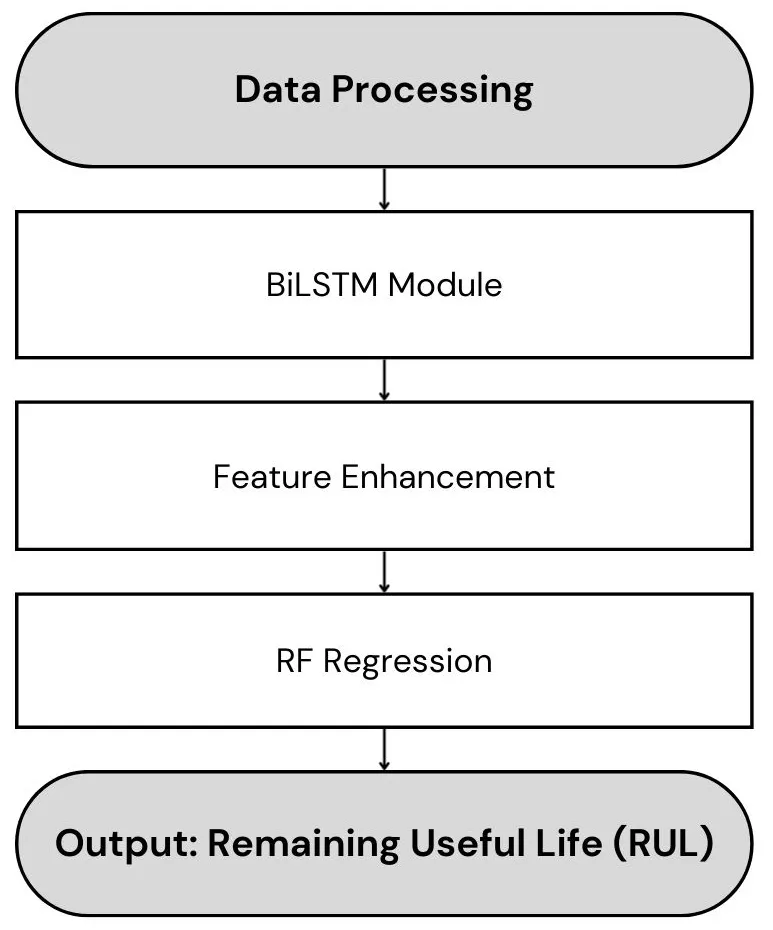
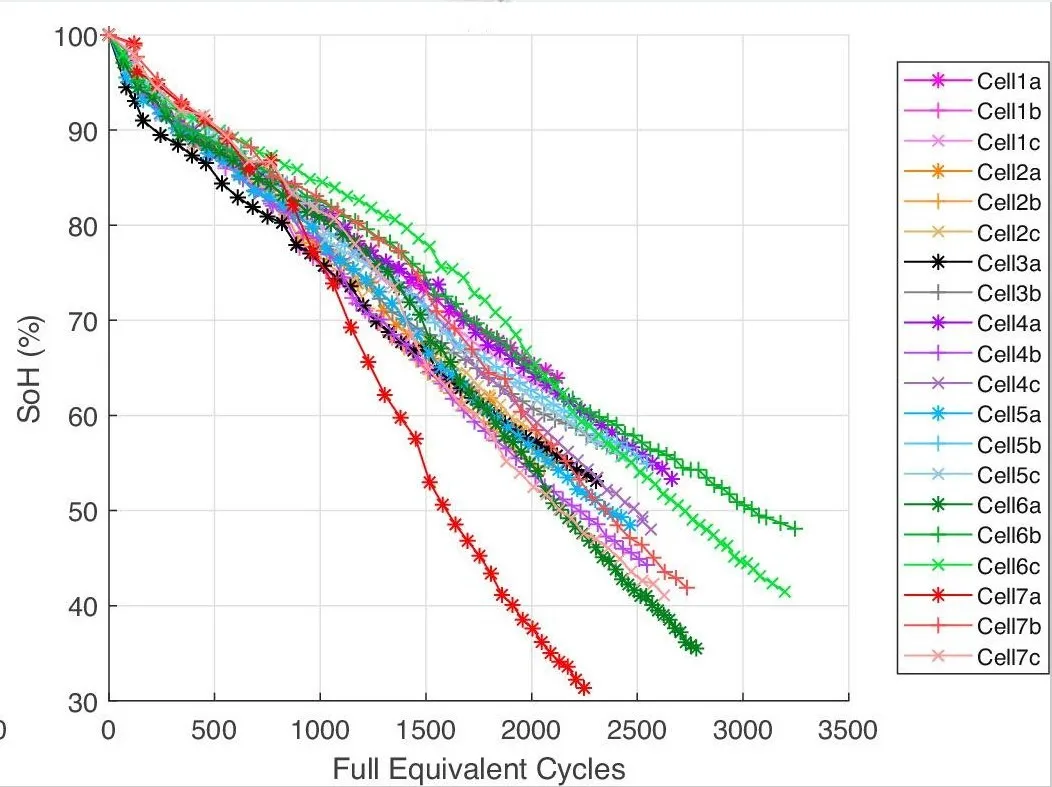
Across four conference presentations the approach moved from random forest regression on six health indicators, through a comparison against long short-term memory networks, to a hybrid BiLSTM-RF framework combining both. A separate strand looked at extreme fast-charge lithium vanadium oxide pouch cells — 10C charging reaching 80% in 4.8 minutes — and what that charging rate does to cell life.
I was first author on the random forest degradation work presented at MRS, and a co-author on the other three. On those, I mentored and coordinated the student teams, contributed to the writing throughout, and produced much of the data analysis and many of the figures shown here.
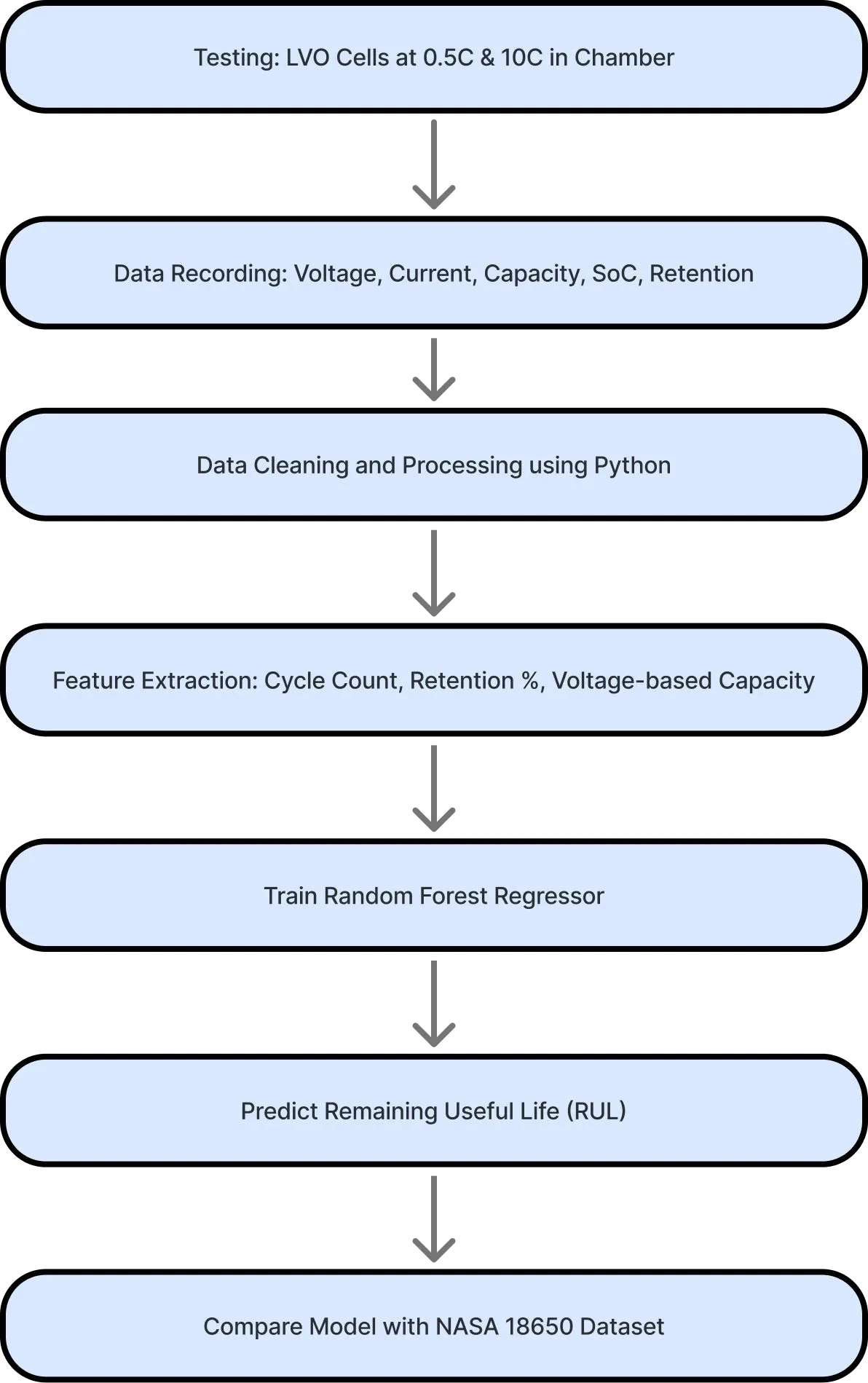
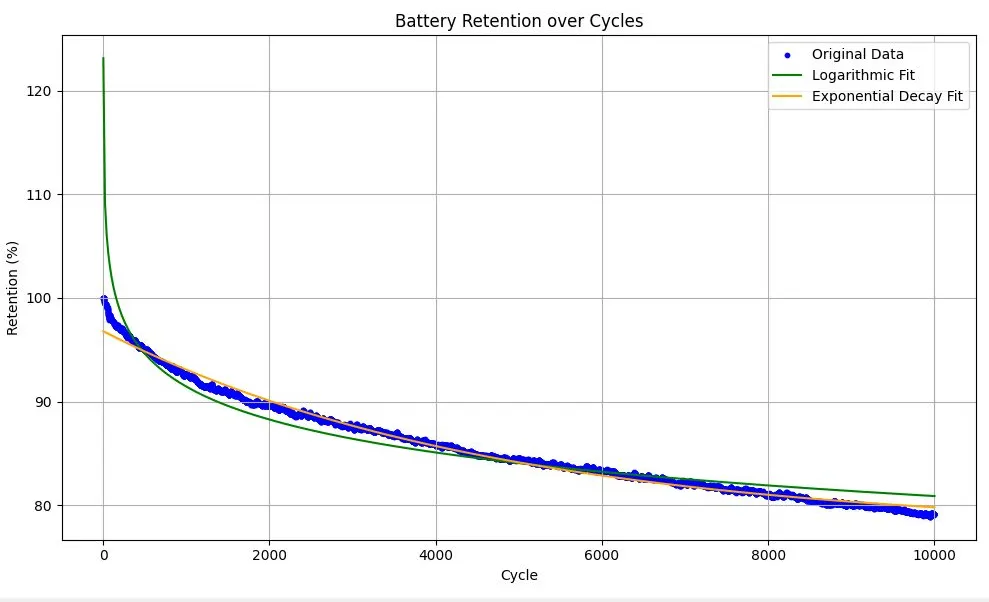
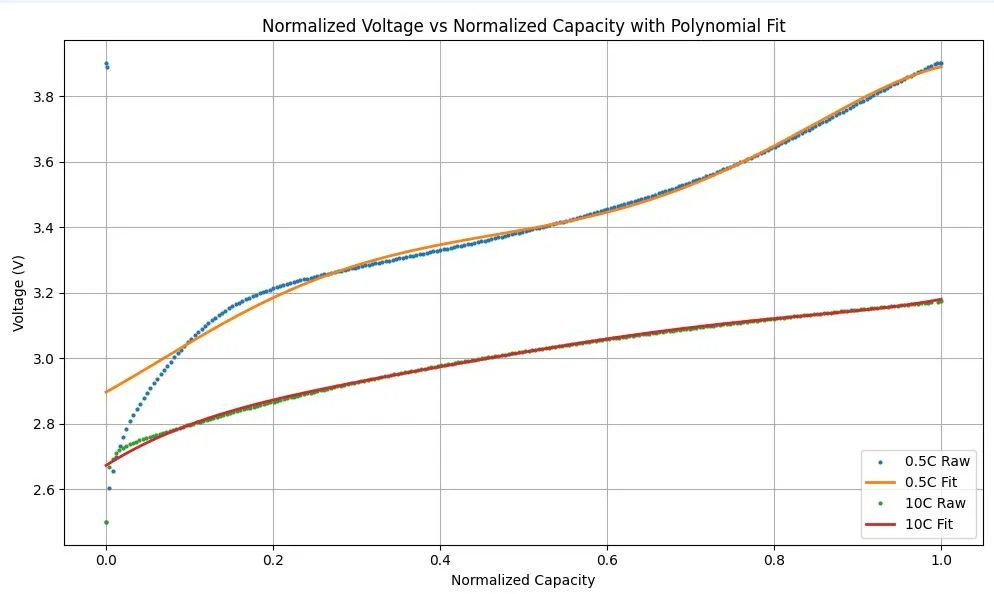
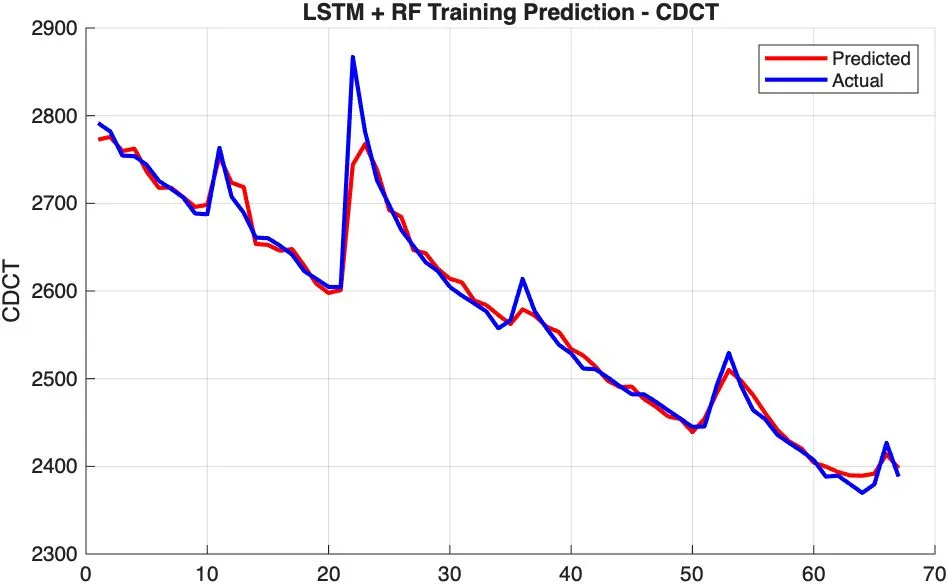
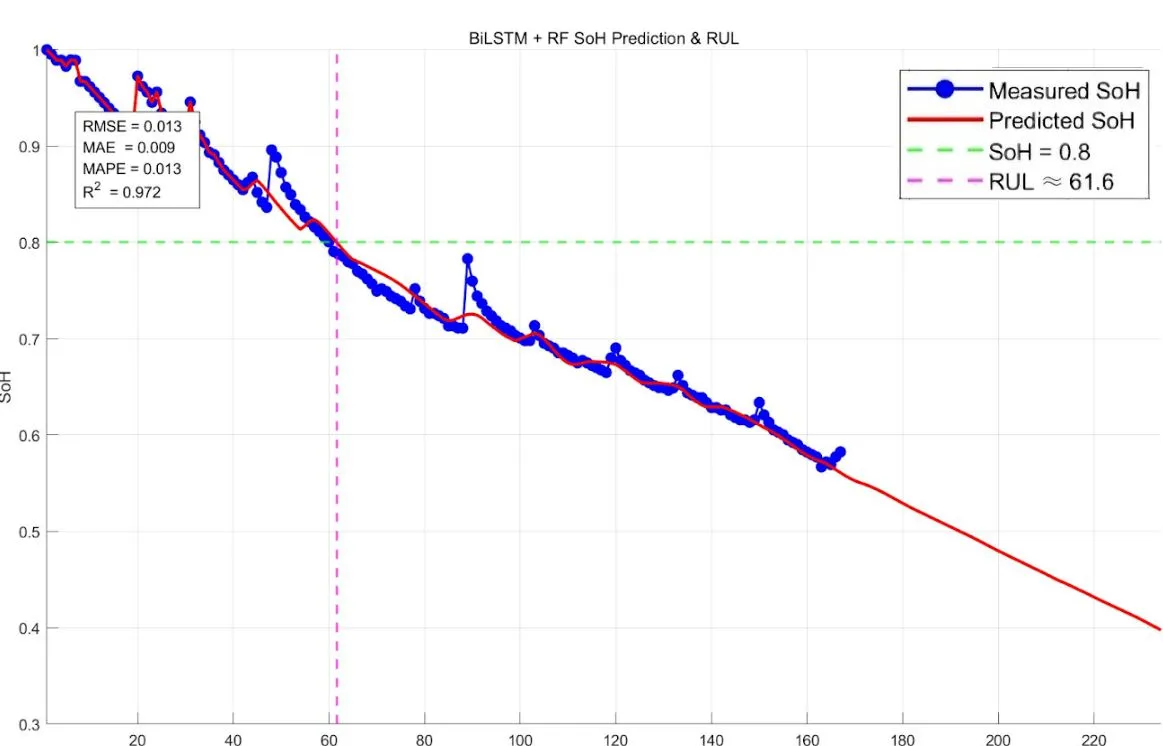
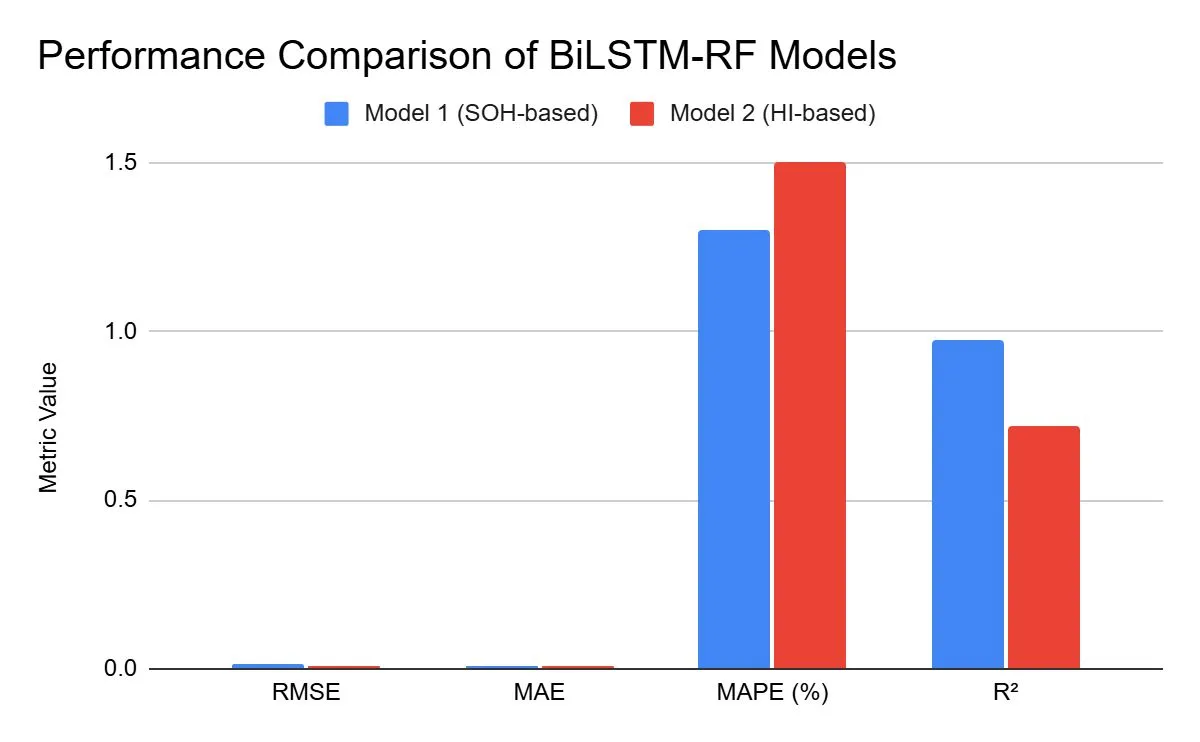
Analysis pipeline: cell testing through feature extraction to remaining-useful-life prediction, benchmarked against the NASA 18650 dataset. · MRS Fall Meeting 2025 · CC BY 4.0Hybrid model architecture: a BiLSTM module feeding feature enhancement and random forest regression to produce a remaining-useful-life estimate. · ACS Western Regional Meeting 2025 · CC BY 4.0Capacity retention across 10,000 cycles, with logarithmic and exponential decay fits. · MRS Fall Meeting 2025 · CC BY 4.0Normalised voltage against normalised capacity at 0.5C and 10C, with polynomial fits. · MRS Fall Meeting 2025 · CC BY 4.0State of health against full equivalent cycles across 21 lithium vanadium oxide cells under extreme fast charge. · MRS Fall Meeting 2025 · CC BY 4.0LSTM and random forest training prediction against measured constant-discharge cycle time. · ACS Western Regional Meeting 2025 · CC BY 4.0Measured against predicted state of health, showing the 80% threshold and the resulting remaining-useful-life estimate (R² = 0.972). · ACS Western Regional Meeting 2025 · CC BY 4.0Error and fit metrics compared between the state-of-health and health-indicator variants of the hybrid model. · IEEE ICDM 2025 · CC BY 4.0
Related publications
Kaiwen Zhao, Cole Younoszai, Linda Shi, Haodong Liu, Pedro Castilla